


Taking on a beloved title is no small feat. For Caleb Landry Jones and Zoë Bleu, stepping into roles tied to a story generations have grown up with came with equal parts exhilaration and anxiety. That’s what makes this take on the story of the famed Dracula so interesting and a must see.
See also: In conversation with Macaulay Culkin: Inside his mysterious role in Fallout season two
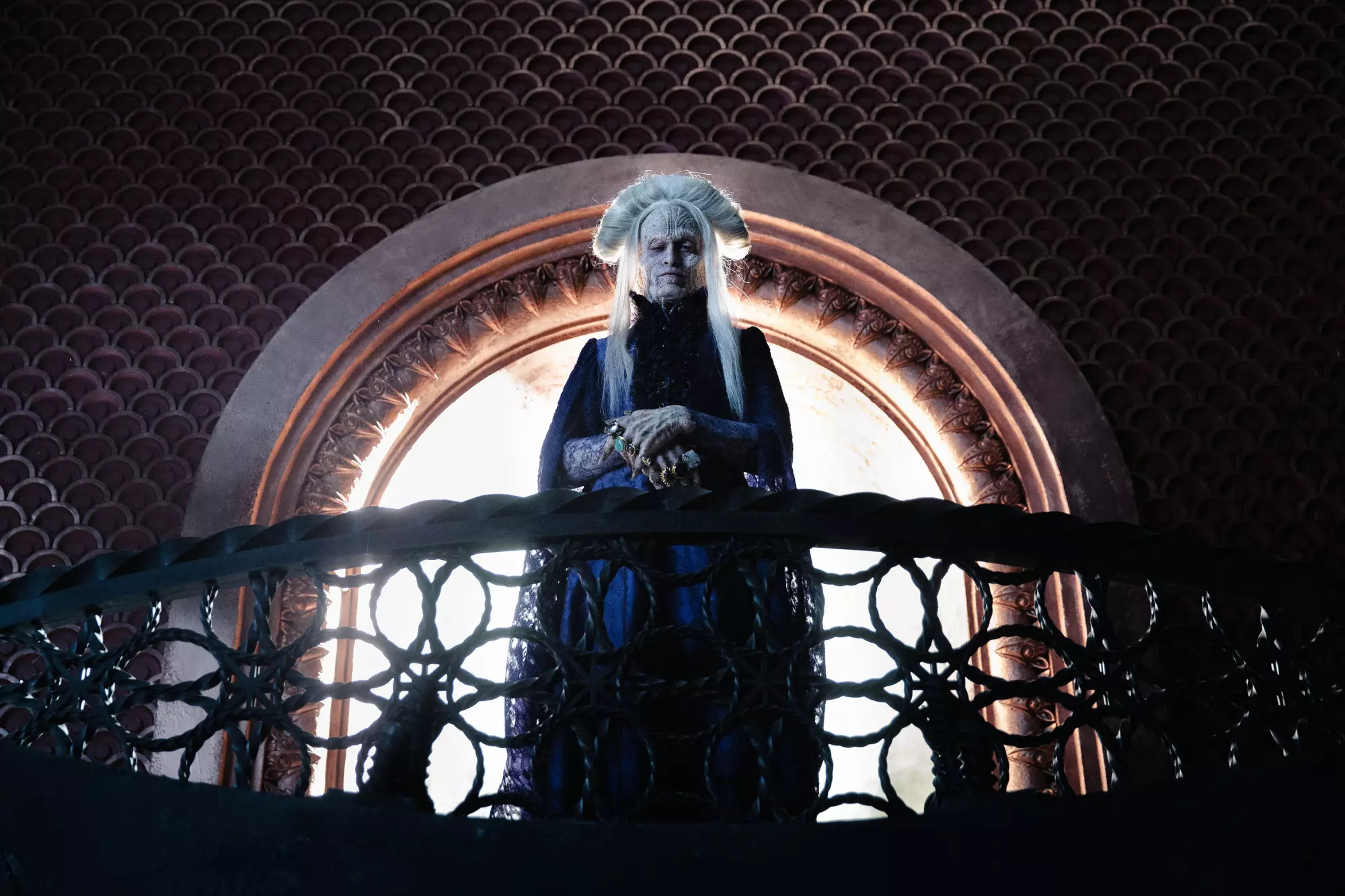
Dracula
When asked what went through their minds after officially saying yes to the project, Zoe Bleu doesn’t hesitate. “Yeah, just anxiety and fear and… oh, yeah. I couldn’t believe it was happening, really. So I was just in complete disbelief, like, ‘Is this really happening?’ ‘How am I going to do this?’ Oh my god.”
ADVERTISEMENT |
Beyond the nerves, there was awe. The opportunity to work alongside a seasoned cast and a director with a singular vision added another layer of pressure. “It’s very daunting, like you said, with the title that is known by so many,” she explains. “You’re not sure which version that person knows.” With an established fan base comes expectation, and expectation can be paralyzing. “I think it just makes it so much harder to be in your head and to try and second-guess what folks want,” she says.
But that instinct to second-guess, they both agree, can become an actor’s biggest disservice. “If it’s true to you or means something to you or is real for you,” Caleb reflects, “then I can’t help but think it has to transcend to some degree to someone else.” At its core, this new adaptation is, as they describe it, a love tale. Longing, madness, desire, playfulness — it demands emotional vulnerability. “You don’t know how you’re going to get there,” Caleb says of reaching those depths, “but with Luc, you know you’re going to get there.”
Commitment, 24/7
Commitment on this project went far beyond emotional immersion. Caleb famously maintained his character’s accent even when the cameras weren’t rolling. Zoe laughs that it was “24/7. It never came off.” Caleb downplays the dedication. “I don’t think it’s like a testament of skill or anything like that,” he explains. “I think it’s a testament of you’re so afraid you’re going to lose it.” After intensive work with a dialect coach, he found it easier to stay in it entirely. “I’m not good at going back and forth,” he admits. “I’ve never been good at that.”
ADVERTISEMENT |

The Dracula production experience
When reflecting on what surprised them most after wrapping, both actors land on the same unexpected realization: that they did it. “I think what surprised me is that I did it,” Zoe says. Caleb echoes her. “We did it.” Two weeks into shooting, the end can feel impossibly far away. “You don’t know if you’re going to make it,” Caleb admits. But that uncertainty often signals something meaningful. “It tells you you’re on something that also means something to you.”
The production demanded everything. “We really poured ourselves into this film,” Zoe says, noting that the entire cast and crew brought the same intensity. Luc’s imagination set a high bar. His visions were grand, often leaving the actors wondering how certain scenes would even be possible. “And then movie magic comes through,” Caleb says, smiling.
More than spectacle, though, what lingers is the camaraderie. On this set, collaboration wasn’t a buzzword — it was survival. “Everyone to the left and right of you is working so tirelessly to make this happen,” Caleb says. “There’s a camaraderie that’s unlike anything I’ve really experienced.”
ADVERTISEMENT |

In an industry where projects can quickly begin to feel like just another job, this one felt different. “There’s a real holding of hands to walk through the fire all together,” he says. For a story rooted in love, it seems fitting that the experience of making it was defined by it too — love for the craft, for the collaborators, and for the dream that carried them all the way to the finish line.
Director Luc Besson on bringing the iconic story to life
Director Luc Besson’s passion for the material adds another layer to the performances Jones and Bleu describe. Contrary to assumption, Besson didn’t stumble upon the script — he wrote it himself after revisiting the original novel. What struck him most wasn’t the horror, but the romance. “I was so surprised to realize that it was a love story because I forgot,” he explains. “It’s the story of a man who waited 400 years to see his wife again. It’s magical. It’s crazy and it’s so romantic.”

That idea — of eternal longing stretched across centuries — became the emotional spine of the film. For Besson, the question wasn’t just how Dracula loves, but how he survives 400 years of waiting. “Sometime he’s totally desperate and he wants to kill himself and sometime he say, ‘Okay, I’m eternal, so let’s try to find her.’” That tension between despair and devotion fuels the story’s operatic scale.
ADVERTISEMENT |
On working with the legendary Christoph Waltz
On set, Besson describes an environment driven purely by craft. “The more the people are really talented, the easy they are to work with because there’s no ego. It’s about the job.” He speaks of long, meticulous script sessions with Christoph Waltz, and of Jones with visible admiration: “I think Caleb is a genius… the best actor of the decade.” Recalling Jones’ dedication to maintaining Dracula’s voice for months — even off-camera — Besson frames it as rare commitment.
Ultimately, his goal for audiences mirrors the actors’ hopes. “For two hours, they forgot the world… and crying, you know, just enjoy the ride.” If viewers leave the theatre momentarily disoriented, emotionally swept away, Besson considers the illusion complete — like a magician whose audience truly believes the rabbit appeared from thin air.
Where can you watch Dracula in Canada?
It’s now in theatres across Canada — Dracula: A Love Tale, the gothic reimagining from visionary filmmaker Luc Besson, is currently playing at major cinema chains including Cineplex, giving audiences the chance to experience the dark romance and lavish visuals on the big screen first. If you prefer to watch at home, the film is also available in Canada for digital rental or purchase via platforms like the Apple TV Store, though it has not yet landed on any subscription-based streaming services.


