

The iPhone has long since replaced the point-and-shoot camera for most people. What’s more interesting is what happens when you put one in the hands of someone who makes photographs for a living.
Professional photographers aren’t necessarily reaching for an iPhone because they’ve abandoned their traditional cameras. Increasingly, they’re incorporating it into the same creative process, thinking about lighting, focal length, RAW files, perspective, exposure and post-production, while taking advantage of a camera that weighs a fraction of their conventional setup.
In honour of World Photography Day, we tapped four leading international photographers working across fashion, music, travel, wildlife and landscapes to find out how the iPhone fits into their professional craft. Their answers suggest the distinction between “phone photography” and simply “photography” is becoming increasingly difficult to define.
ADVERTISEMENT |
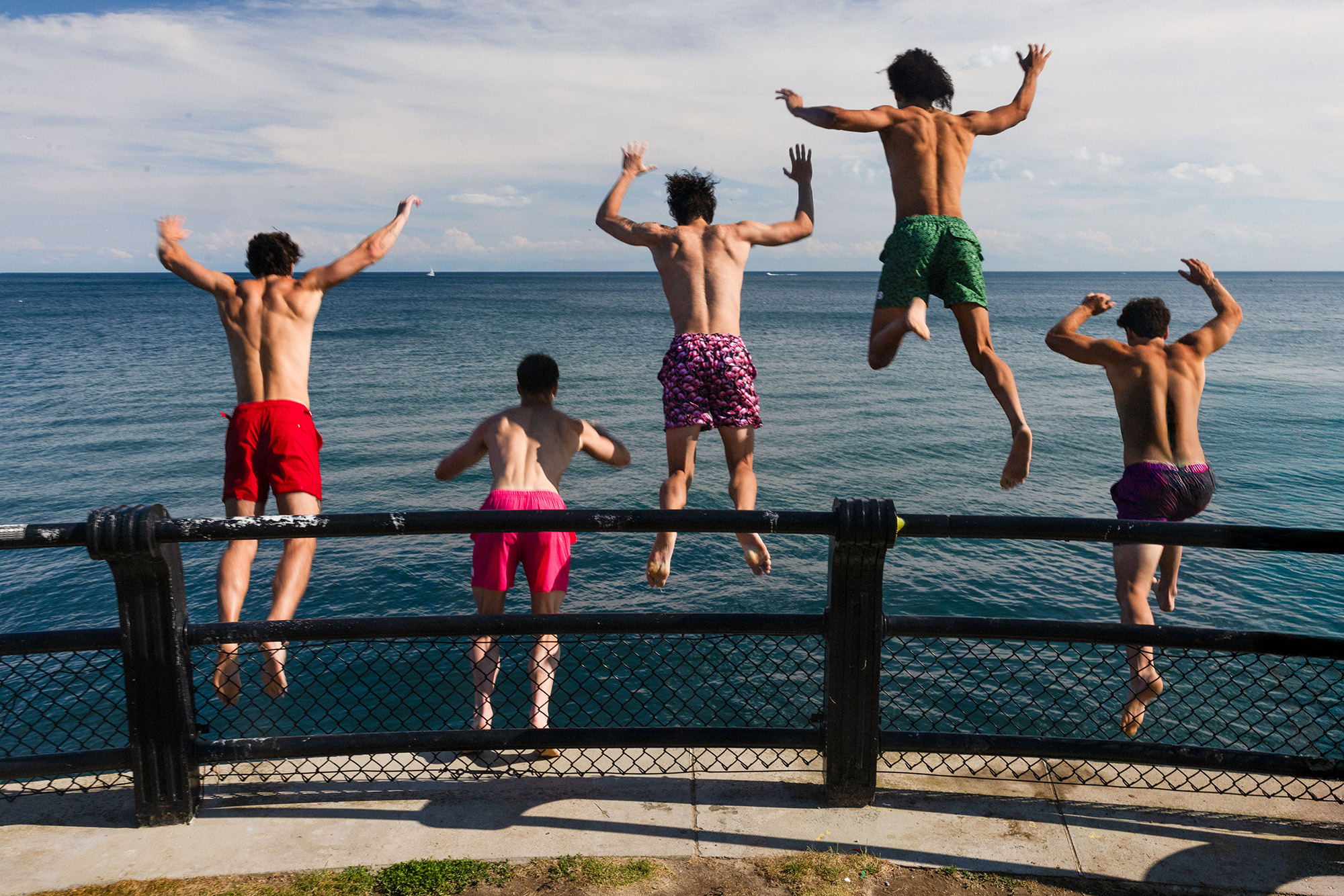
Nick Merzetti is lighting iPhone shoots like a professional set
Put an iPhone in fashion photographer Nick Merzetti’s hands and he isn’t necessarily going to point it toward a model and let computational photography do the rest.
He might start setting up strobes.
“People underestimate its flash capabilities,” Merzetti says. “I love using the Godox app to sync strobes with my iPhone.”
That’s an important distinction. Merzetti isn’t changing the principles of professional photography to accommodate the phone. He’s applying those same principles to it.
“Once you light a scene as you would with traditional camera gear, the iPhone truly shines and produces client-ready imagery.”
Composition gets the same treatment.
ADVERTISEMENT |
“Thoughtfully considering your composition before pressing the shutter is the single best way to increase your hit rate,” he says.
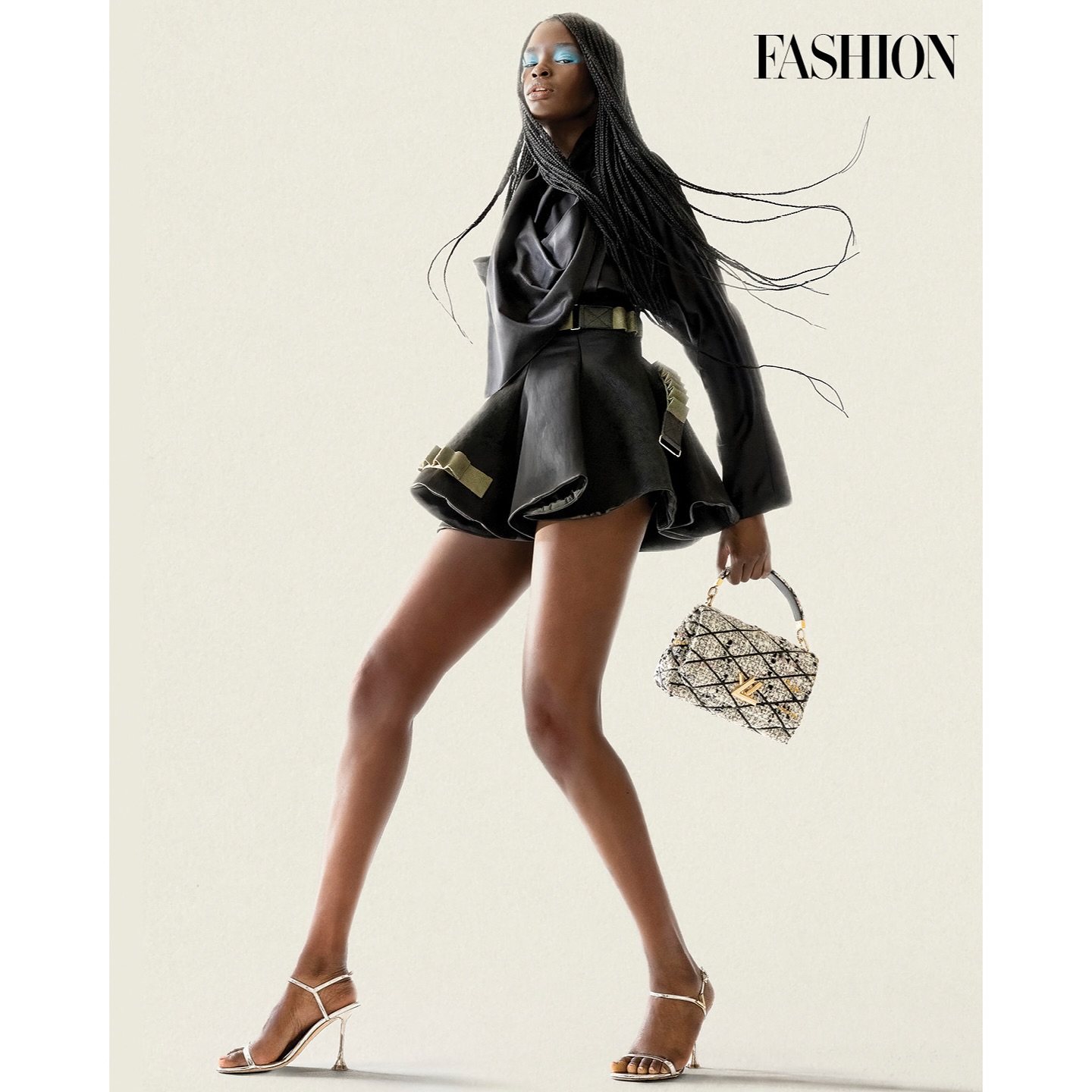
His preferred iPhone camera is the Ultra Wide, which he uses to introduce controlled distortion into fashion imagery. Shooting a full-body look from close range can stretch the model into the frame, while the opposite approach can produce a completely different result.
For a recent beach shoot, Merzetti used the 8x Telephoto option to shoot from a distance and compress the scene, flattening its perspective to achieve what he describes as a more sculptural look.
Then there are the files themselves.
Merzetti uses apps including Halide to capture unprocessed ProRAW files, giving himself greater latitude over colour and exposure. He intentionally underexposes slightly when shooting before bringing the files into Photoshop and other post-production tools, just as he would with images from his traditional cameras.
“The vision happens both before and after the shoot.”

Perhaps more interesting than any technical specification, however, is what happens when the traditional camera disappears from between photographer and subject.
ADVERTISEMENT |
“Stripping away heavy gear breaks down the wall between photographer and talent,” he says. “The intimate, lower-profile camera presence lets subjects drop their guard and interact much more naturally.”
It changes how Merzetti moves, too. Without holding a heavy camera and lens, he can maintain overhead angles longer, move more freely around his subject and focus on creative framing without the same physical strain.

He has even experimented with taking the iPhone into the water.
“Some flash shots I took of a model falling into the water turned out exceptionally well,” he says. “Shooting underwater with an iPhone is effortlessly simple compared to setting up housings for regular cameras.”
For an industry increasingly requiring photographers to move between stills, video and social content on the same set, Merzetti sees that flexibility becoming even more valuable.

Emmett Sparling’s advice still holds: treat it like a real camera
When Gent’s Post previously caught up with Canadian travel photographer and filmmaker Emmett Sparling in 2024, after he put the then-new iPhone 16 Pro Max through its paces, his central piece of advice was refreshingly straightforward: treat your iPhone like your SLR and you’ll get great results.
At the time, that meant approaching mobile photography with the same seriousness he applied to his traditional equipment, from filters and stabilization to RAW capture and intentional composition.
Two years later, Sparling isn’t walking that position back.
ADVERTISEMENT |
In fact, when asked what has genuinely changed the way he approaches outdoor and travel photography with the latest iPhone, he points to “the ability to shoot RAW images and ProRes video.”
“That immediately added my iPhone as a professional tool in my camera bag,” he says.
His thinking around the familiar adage that “the best camera is the one that’s with you” has evolved, too.

“To me, this used to mean that it’s okay to sometimes sacrifice quality in order to capture a powerful moment,” Sparling says. “With the latest iPhone, sacrificing quality isn’t really a concern of mine anymore.”
While travelling through the Simien Mountains in northern Ethiopia, having that camera immediately available allowed him to capture an image of a Gelada baboon.
“Wildlife images are always fleeting moments and having my iPhone in my pocket allowed me to capture it.”
The equipment has changed considerably. The fundamentals haven’t.
ADVERTISEMENT |
For landscapes, Sparling still emphasizes composition, leading lines and light. When photographing a person within a landscape, he finds his composition first and then integrates the subject, often positioning them around one third of the frame and looking into the remaining scene.
And when conditions aren’t cooperating, there isn’t a setting that replaces experience.
“It’s all about practice, practice, practice,” he says. “The more you shoot in different lighting situations, you’ll grow more confident in each setting. Photography is all about trial and error.”

Geoff Coombs uses iPhone as a second camera in the field
Sometimes the best argument for a professional carrying an iPhone isn’t that it can replace thousands of dollars of camera equipment.
It’s that the thousands of dollars of equipment are already busy.
Outdoor photographer Geoff Coombs regularly heads onto the ice sheets of Georgian Bay to photograph underwater. His Canon may already be rigged inside specialized underwater housing, leaving him unable to quickly switch setups when something interesting happens on the surface.
ADVERTISEMENT |
That’s where his iPhone comes in.

“I depend on my iPhone to capture interesting things happening on the surface,” Coombs says. “It might be a small macro detail in the ice or a wider landscape.”
Rather than interrupting his primary setup, he effectively has another capable camera ready to go.
“When I’m working in remote environments, I’m often carrying a lot of specialized equipment, so having an iPhone that can still produce beautiful images gives me another way to see and capture the environment without adding more gear,” he says.
Coombs’ approach also demonstrates why buying a better camera doesn’t automatically make a better photograph.
For landscapes, he looks for foreground, midground and background elements that create layers within a two-dimensional image. He uses leading lines to control where the viewer looks and selects focal lengths based on what he’s trying to communicate.
Ultra Wide comes out when the environment itself is the story and interesting elements extend from his feet toward the horizon. Telephoto does almost the opposite: simplifying the frame, compressing the scene or isolating one detail within a much larger landscape.
“One of my favourite things to look for is leading lines,” Coombs says. “It could be a rushing river leading towards a waterfall, or a crack in the ice leading out towards a vast horizon.”
When the light gets harsh, he’ll underexpose to protect highlights or find open shade. In low light, he focuses on exposure before looking for framing, colour and atmosphere.
And sometimes the most interesting photograph is hiding in a tiny piece of the landscape.
“I really enjoy shooting macro on the iPhone, especially when I’m out around the ice,” he says. “I’m always looking for interesting patterns, textures and small details that you might normally overlook.”
It’s photography 101 applied to a remarkably modern camera.

Maria Jose Govea knows technology can’t replace timing
Now put the same camera in an environment where practically nothing stays still.
Music photographer Maria Jose Govea, known as The Supermaniak, deals with performers moving across stages, dramatic contrast and lighting that can completely change in a matter of seconds.
Her advice isn’t to find a magical setting that fixes all of that.
Wait.

“Being patient and waiting for a moment of great stage lighting is my best advice,” she says.
Govea exposes for the artist rather than trying to preserve every detail in the venue. If the surrounding room falls into darkness, that’s not necessarily a problem.
“I’m not too concerned if the rest of the room is dark as long as the stage looks great,” she says. “I also love high contrast, so I embrace having the rest of the room being dark!”
Her preferred starting point is 1x, moving to 8x when she’s farther from the stage. She also recommends physically moving around whenever possible rather than relying exclusively on zoom.
Positioning, she says, is key.

“I would try to get as close as possible, and I would also try to move around the venue to get an alternative perspective and a variety of angles. You’d be surprised at how different things look like from different spots.”
The freedom of a small camera is particularly useful in live music.
“The fact that the iPhone is so incredibly lightweight gives me a certain kind of freedom that I wouldn’t have with a more professional setup,” she says.
She experienced that as a fan herself during Billie Eilish’s most recent Los Angeles tour. Govea initially decided she wouldn’t photograph the concert and would simply enjoy it. Eventually, she pulled out her iPhone.

“At first I thought I just wanted to be present during the show and not take any photos, but at some point I decided to get my iPhone out and capture some memories. I’m so happy I did!”
Despite being seated far from the stage, she captured a photograph detailed enough to see Eilish’s outfit and expression clearly.
It illustrates something professional photographers understand better than most: sometimes getting the photograph isn’t about having every piece of equipment you’d ideally want.
It’s about recognizing the moment and having a camera ready when it happens.

A professional tool doesn’t automatically make you a professional
The latest iPhone camera technology has pushed what’s possible from something that still, ultimately, fits in your pocket. ProRAW, ProRes, Ultra Wide and Telephoto options, increasingly capable low-light photography and sophisticated computational processing give photographers more to work with than ever before.
Those capabilities matter. But none of the photographers we spoke with suggested specifications were a shortcut to great photography.
Merzetti talks about lighting and composition. Sparling talks about practice. Coombs looks for layers and leading lines. Govea waits for the light.
Better technology expands what a photographer can do. It doesn’t decide where to stand, recognize the perfect expression, find a leading line in the ice or know when the light hitting a stage is about to make the photograph.
The camera in your pocket has become remarkably capable.
What you point it at, and how you see it, remains entirely up to you.


